Fallen tree guide
A neighbor's tree fell on my fence. Who pays?
Last updated: October 23, 2026
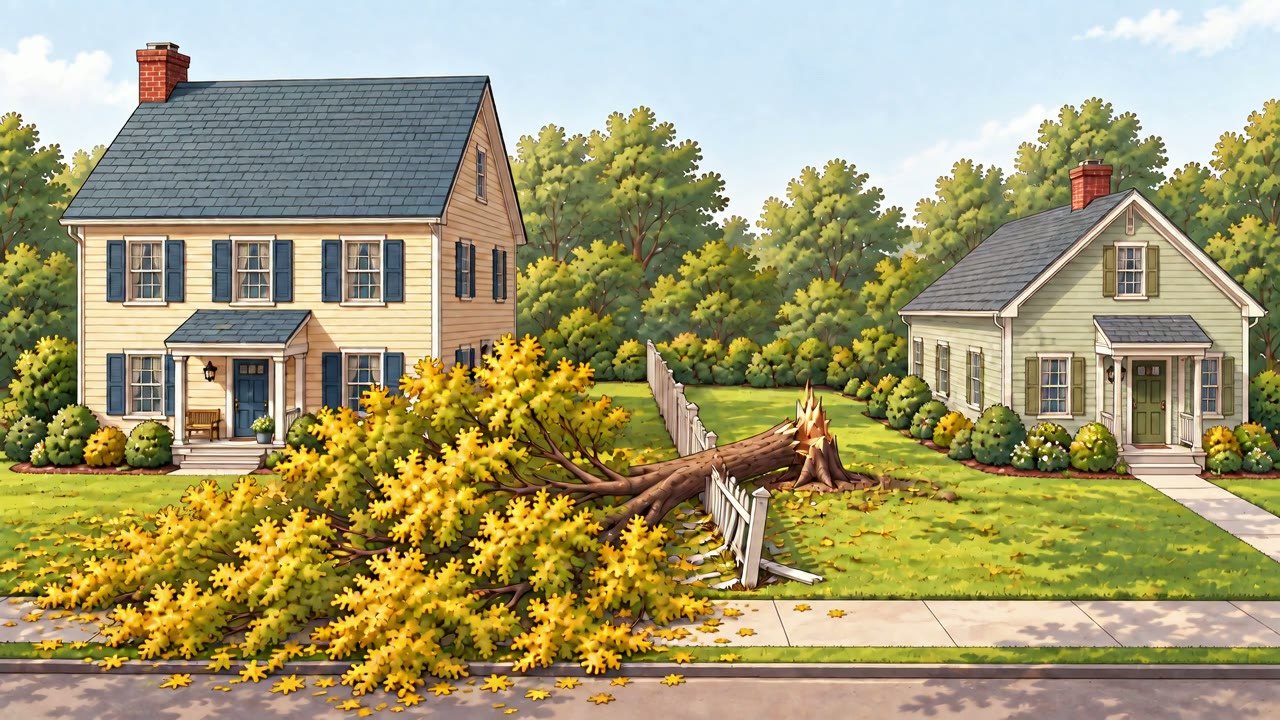
In most cases, your own homeowners policy handles your fence, even though the tree belonged to your neighbor.
That surprises almost everyone. It is probably the most common misunderstanding there is about trees and property damage.
Why your policy and not theirs
Insurance generally follows the property that was damaged, not the property the tree was growing on. Your fence is yours, so your policy is the one that responds. Most homeowners policies cover fences under what is usually called other structures, a separate limit from the one covering the house itself. Your deductible normally applies, the same as any other claim.
This feels unfair to a lot of people, and it is worth understanding rather than arguing about. Your neighbor did not cause the storm.
When it is different
The exception is negligence, and the key word is knew.
If the tree was already dead, dying, visibly diseased or leaning badly, and your neighbor knew or reasonably should have known, their liability coverage may become part of the conversation. A healthy tree that comes down in high wind is nobody's fault. A dead tree that someone had been asked to deal with for two years is a different situation.
What usually matters is whether there is a record. A text message, an email, a note, a photo with a date. Verbal conversations over the fence are hard to rely on later.
If your tree fell on their fence
The same rule applies in reverse. Their fence, their policy, unless your tree was dead or dangerous and you had been told about it. If a neighbor asks you to file on your policy for their fence, it is reasonable to slow down and talk to your own agent before agreeing to anything.
What to do in the first day or two
- Photograph everything before you clear it. Wide shots and close shots, including the base of the tree.
- Write down the date and what the weather was doing.
- Keep receipts for any emergency work, like getting a tree off a driveway.
- Find your declarations page and look up two numbers: your other structures limit and your deductible.
- Ask before you file. Talk to your agent about whether this is worth a claim.
Whether to file at all
Fence repairs are often close to the size of a typical deductible, which means a claim may return very little. Claims also stay on your record and can affect future pricing and renewal. None of that means do not file. It means find out the repair cost and your deductible first, then decide with your agent.
What your policy calls these things
- Other structures
- The part of your policy covering fences, detached garages, sheds and similar. Commonly set as a percentage of your dwelling limit, often around ten percent, but check your own declarations page rather than assuming.
- Debris removal
- Removing the fallen tree may be covered, often with its own limit, and the rules can differ depending on whether the tree damaged a covered structure.
- Deductible
- The amount you pay before the policy pays.
Questions worth asking your agent
- What is my other structures limit, and what does it come to in dollars?
- Does my policy pay to remove the tree itself, and does that change if it had not hit anything?
- Does my deductible apply to a fence claim?
- If my neighbor's tree was dead and I had told them, how would that change things?
Before the next storm
Walk your property line once a year and look up. A leaning trunk, dead limbs, bare branches in summer or fungus at the base are all worth noticing while nothing has happened yet. If something concerns you, put it in writing to your neighbor and keep a copy. See what this looks like in the What-If House.
Keep reading
Want this checked against your own answers?
That is how these policies usually work in general. What matters is what yours says. The report is built from your answers about your home and walks through the topics they point to. Upload your own policy document and it also shows you what it found, with no insurance jargon. One price, $9.
No app to download. No subscription. One report, one price.
Every policy is different, and so is every state. This explains how these claims usually work, not how yours will be decided.
CoverageDecoder is an educational tool, not insurance advice. For decisions about your coverage, talk with your licensed insurance agent.